
How to Design and Build a Restaurant in Los Angeles 2026
Opening a restaurant in Los Angeles is an exciting prospect. The city boasts one of the most vibrant and diverse culinary scenes in the world. From trendy West Hollywood hotspots to neighborhood staples in Silver Lake, the opportunity to make your mark is huge. However, the LA market is incredibly competitive. Diners expect incredible food, but they also demand a memorable atmosphere.
Having a great menu is only the beginning. True success in the Los Angeles hospitality industry depends on a well-executed process. The journey from a raw concept to a fully functioning dining room requires careful planning, navigating complex city regulations, and flawless construction. Without the right approach, even the most brilliant ideas can fall flat in one of the world's most discerning dining markets.
This guide will walk you through the complete lifecycle of creating a restaurant in Los Angeles. We will cover everything from initial feasibility to the grand opening. You will learn exactly what it takes to build a profitable and stunning space in Los Angeles.
STEP 1: Laying the Foundation: Concept, Brand, and Feasibility
Your Los Angeles restaurant concept goes far beyond the cuisine you plan to serve. It dictates the entire guest experience, your market positioning, and your target audience. You are defining your brand through the physical space. The lighting, seating, and flow of the room communicate your identity just as much as your logo does.
It is vital to align your creative concept with operational reality. Early feasibility studies help you understand what is actually possible in the Los Angeles market. You must define budget ranges early. This includes soft costs like permits and design fees, along with hard costs like construction materials. You should also set realistic timeline expectations given how complex the LA permitting environment can be.
Partnering with top restaurant architects in Los Angeles early in the process shapes the viability of your project. Early decisions dictate everything downstream. A solid foundation prevents costly revisions and ensures your vision can actually be built within your budget.
STEP 2: Site Selection and Understanding LA Regulations
Choosing the right Los Angeles location is about much more than curb appeal. The space must meet strict zoning and land use considerations specific to the city. Before signing a lease, you must verify if a restaurant is legally allowed in that specific zone.
If the previous tenant operated a retail store, you will face change-of-use challenges. Converting a retail space into a restaurant in Los Angeles requires proving to the city that you can meet stricter parking, ADA compliance, and infrastructure requirements. Architect Firms with deep LA experience have often prepared well over a hundred Conditional Use Permit documents in the city alone, giving clients a meaningful head start in the approval process.
You will also need to navigate several Los Angeles permitting bodies. The Department of Building and Safety, the County Health Department, and the Fire Department all have specific codes you must meet. Understanding that site selection and city regulations equal your project's overall feasibility will save you massive headaches later.
STEP 3: Translating Vision into Design
A successful restaurant design firm in Los Angeles knows that design equals performance. It is never just about decoration. The layout must serve both the customer and the staff perfectly. And in a city like Los Angeles, where dining out is deeply woven into the culture, the design of your space is part of the conversation before a single dish is served.
Designing the Guest Experience
Great design maps out the entire customer journey. Think about what the guest sees and feels from the moment they enter the door to the time they leave. Emotional and sensory design plays a huge role here. Lighting levels, acoustic materials to dampen loud echoes, and the texture of the tables all contribute to the dining experience. The 28,000-square-foot Gravitas private social club in Beverly Hills illustrates this perfectly, with an open-air garden bar featuring a retractable roof, terrazzo flooring, marble walls, and laser-cut ceiling accents — every detail working together to craft a specific emotional atmosphere from the moment a Los Angeles guest walks in.
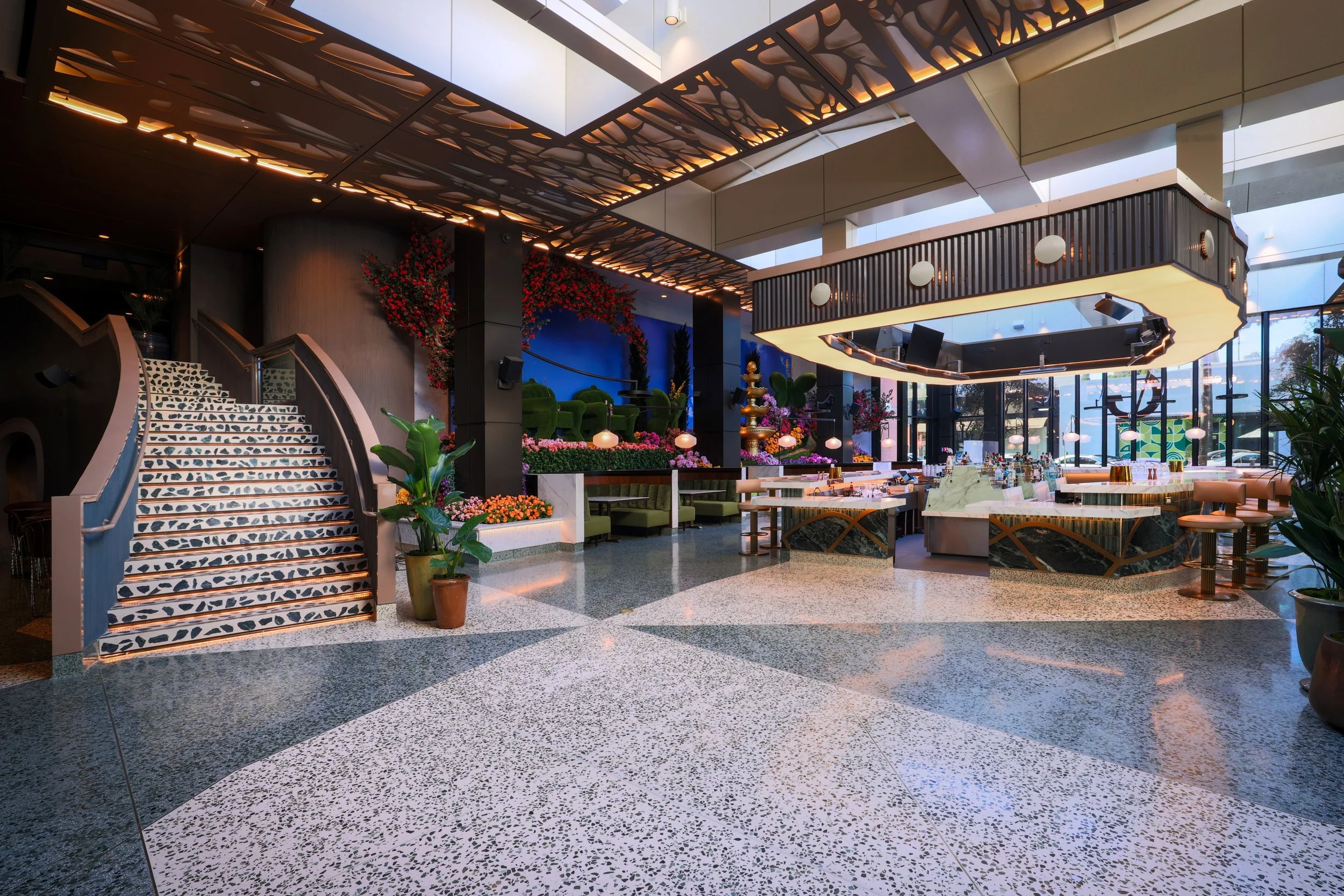
Figure 1: Gravitas Private Social Club, Beverly Hills, Los Angeles, designed by Kelly Architects, featuring a sweeping sculptural staircase, double-height atrium with articulated ceiling canopy, floral installations, and a dramatic grand-arrival hospitality aesthetic.
Floor Planning and Space Allocation
You must strike a careful balance between the front of house and the back of house. While maximizing seating efficiency increases revenue, you cannot sacrifice customer comfort. Circulation paths are also critical in a busy Los Angeles dining room. Staff must be able to move food quickly without bumping into guests navigating to the restrooms.
Kitchen Design and Operational Flow
The kitchen is the engine of your business. The workflow logic must make sense, moving seamlessly from prep to cooking to plating. Kitchen design is heavily driven by the specific equipment your menu requires. An efficient kitchen directly impacts your profitability by speeding up service and reducing staff fatigue. This is one of the core areas of focus for any serious Los Angeles hospitality architecture practice, since getting it wrong is one of the most expensive mistakes an owner can make.
STEP 4: Design Development and Approvals
Once the layout is set, your concept must be turned into technical drawings. This phase bridges the gap between creative design and the Los Angeles city approval process. Your architect will coordinate with mechanical, electrical, and plumbing engineers to ensure the building systems can handle the demands of a commercial kitchen.
Next comes the plan check process. The City of Los Angeles will review the drawings and likely request revisions. Navigating Los Angeles approval timelines requires patience and expertise. By coordinating with engineers early, experienced Los Angeles architects act as critical problem solvers. They anticipate city requirements and avoid months of potential delays.
STEP 5: Pre-Construction Planning
With approved plans in hand, you move into pre-construction. You will finalize all construction documents and align the final design with your Los Angeles budget realities. If costs come in high, your team will use value engineering to find more affordable materials that still achieve the desired look.
This is also the time for contractor bidding and selection. You want to choose a builder with specific experience in Los Angeles restaurant construction. The best firms draw from an established network of qualified local contractors, selecting multiple teams to prepare competitive bids for every project. Together with your contractor and architect, you will map out a detailed construction schedule. Good planning at this stage prevents costly mistakes once the hammers start swinging. If you want to understand the full scope of what this phase involves, the services overview breaks down how bidding, negotiation, and construction documentation work together.
STEP 6:Construction and Build-Out
The physical transformation of your Los Angeles space happens in several key phases. It typically starts with demolition to clear out the old interiors. Next comes the infrastructure phase, where vital plumbing, electrical wiring, and HVAC systems are installed behind the walls.
Once the rough utilities are in place, the kitchen equipment is installed. Finally, the interior finishes bring the space to life. This includes flooring, paint, custom millwork, and lighting fixtures. Constant coordination between the architect, the contractor, and the owner is essential throughout any Los Angeles build-out. Unexpected challenges will arise, and strong collaboration ensures they are handled quickly. Projects like Pikoh Kitchen + Bar, a full operational kitchen and bar concept built on Pico Boulevard show what thoughtful Los Angeles build-out coordination can achieve even in complex, multi-use environments. You can explore more examples like it in the project portfolio.
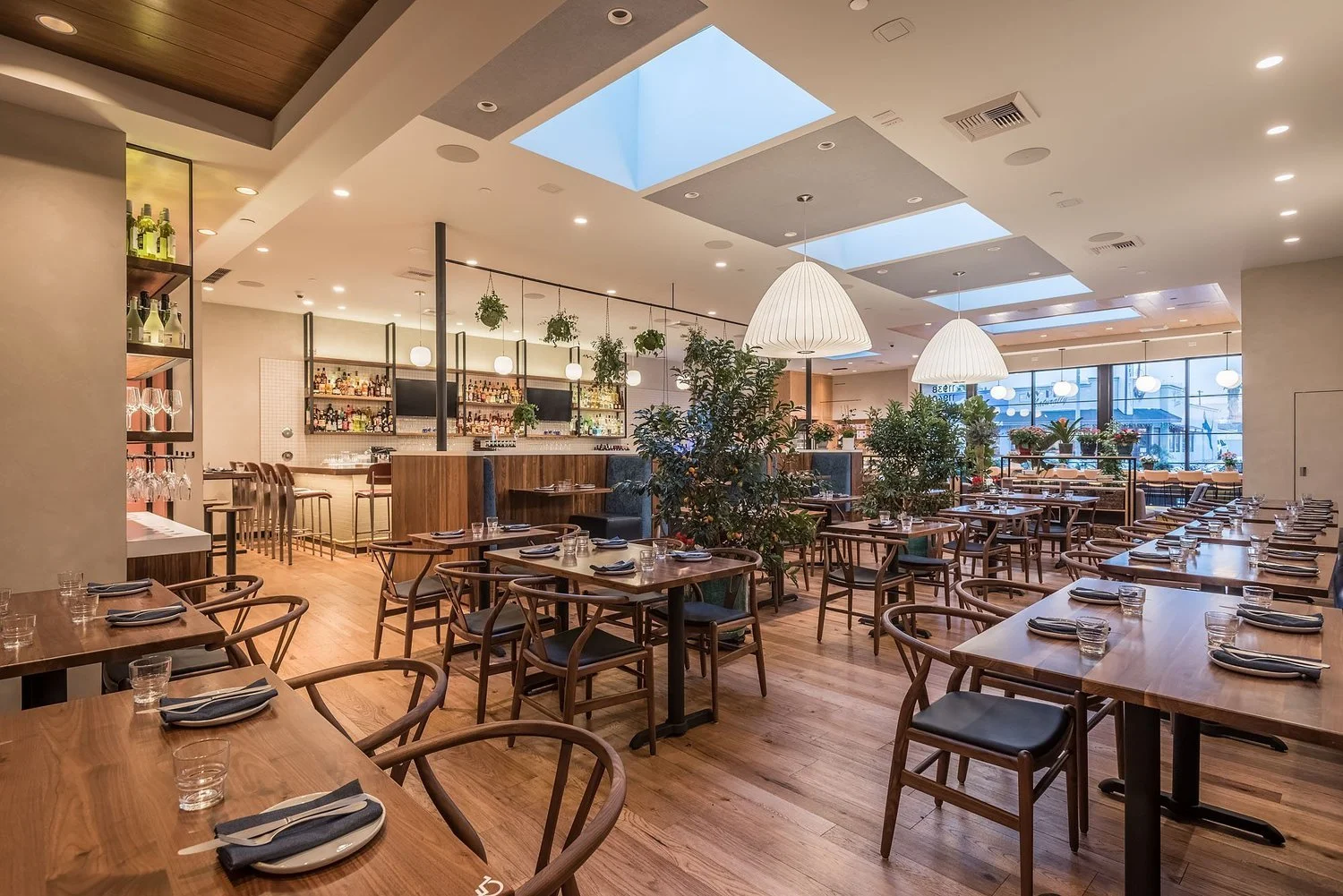
Figure 2: Pikoh Kitchen + Bar, Pico Boulevard, Los Angeles, featuring a skylit dining room with large-format clerestory apertures, an open-concept kitchen island at the heart of the floor plan, wishbone dining chairs in warm walnut, pendant globe lighting, and an airy, biophilic California-casual dining aesthetic.
STEP 7: Inspections, Final Steps, and Pre-Opening
Opening a Los Angeles restaurant is a process rather than a single moment. Before you can serve a single meal, you must pass a series of final inspections. The health department, fire department, and Los Angeles building inspectors must all sign off on the space.
Common bottlenecks occur here if equipment was installed incorrectly or if minor safety codes were missed. Once you secure your certificate of occupancy, you can begin staff training and operational testing. Hosting a soft opening allows your team to practice service and make necessary adjustments before dealing with the Los Angeles public. Understanding what the full process looks like from concept to opening helps owners prepare for this phase rather than being caught off guard by it.
STEP 8: Launching Your Restaurant in Los Angeles
First impressions matter immensely in the Los Angeles market. The physical space you have built is one of your strongest marketing tools. Strong branding combined with expert commercial interior design in Los Angeles creates a buzz that draws people in. Projects like the AIA People's Choice Award-winning Osteria Mozza on Melrose show what is possible when design, cuisine, and Los Angeles neighborhood identity come together flawlessly. Engage with your local neighborhood councils and community groups to build visibility and secure a loyal Los Angeles following right out of the gate.
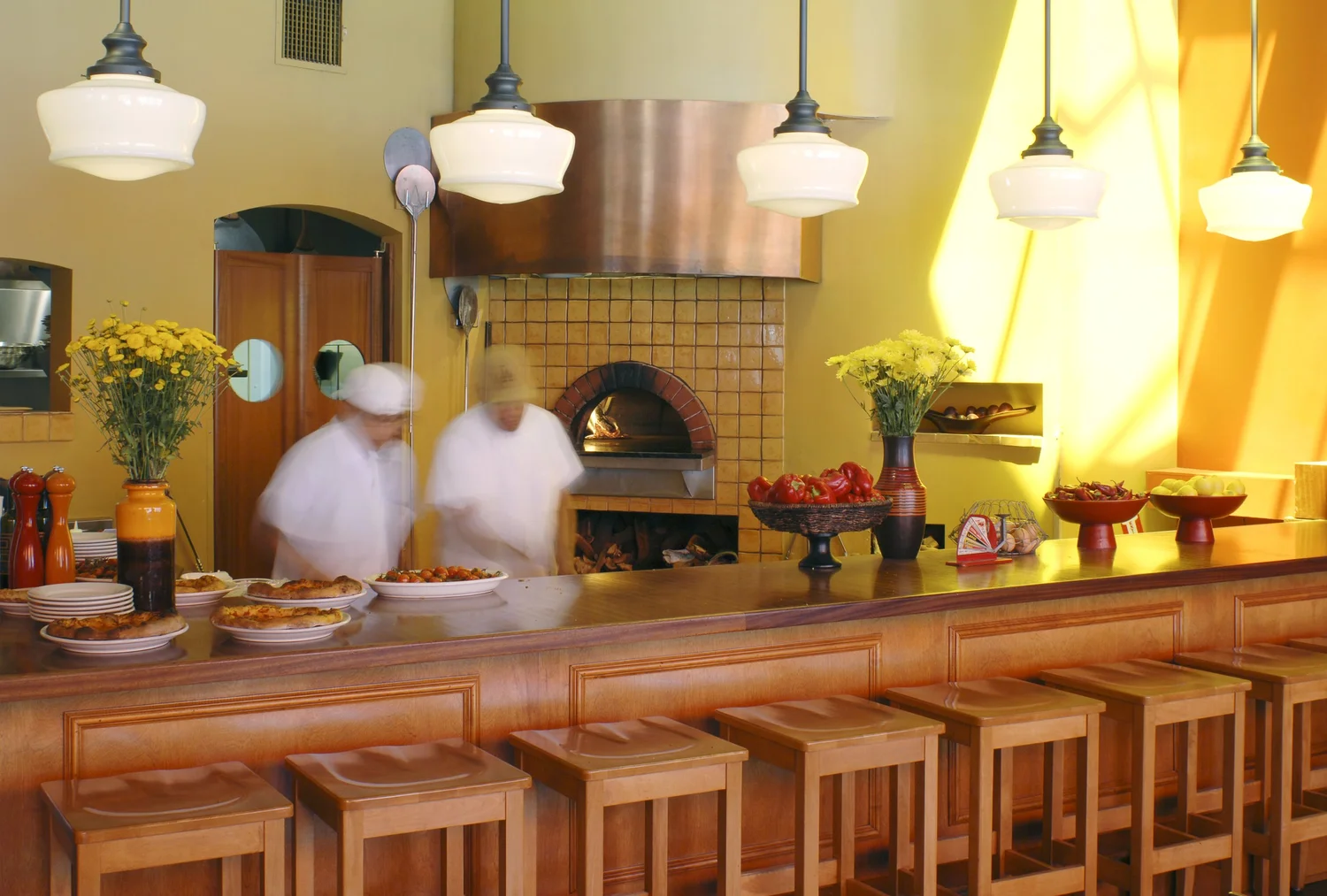
Figure 3: Osteria Mozza, Melrose Avenue, Los Angeles, featuring an open wood-fired pizza hearth clad in handmade terra cotta tile, a hammered copper range hood, schoolhouse pendant lighting, and a vibrant, market-Italian trattoria kitchen aesthetic.
STEP 9: Bringing It All Together
Restaurant development in Los Angeles is a deeply interconnected process. Every phase relies on the success of the one before it. Poor planning easily leads to blown budgets and delayed openings. Conversely, expert guidance ensures a smooth journey from your first idea to opening night in one of the world's great food cities.
Kelly Architects serves as a dedicated partner across all phases of your Los Angeles restaurant project. We are not just designers. We are process leaders who specialize in hospitality architecture in Los Angeles. Founded in 2003, we have been instrumental in bringing some of the city's most celebrated venues to life, and we understand how to navigate the complexities of Los Angeles while delivering stunning, profitable spaces.
Ready to turn your Los Angeles restaurant dream into a reality? Contact Kelly Architects today and start planning your project with confidence.